

UK Welfare Spending Explained: What It Means for Your Financial Future
Understanding UK Welfare Spending and why long-term financial planning is more important than ever.
Hardly a week passes without another headline about UK Welfare Spending. Whether it is discussions about the rising cost of the State Pension, disability benefits or government borrowing, the topic is rarely far from the news.
These headlines can often leave people feeling uncertain about the future. Will taxes increase? Will pension rules change? Could future governments reduce public spending? More importantly, how might any of these decisions affect your own financial plans?
At PWS Financial Consulting, we believe it is important to look beyond the headlines and understand the facts. Rather than focusing on political debate, we encourage clients to consider how changes in UK Welfare Spending may influence future financial planning and why having a robust long-term strategy is more valuable than ever.
In This Post
What is UK Welfare Spending?
Many people assume UK Welfare Spending simply refers to unemployment benefits. In reality, the welfare system is much broader and supports millions of people throughout different stages of life.
It includes:
- State Pension
- Universal Credit
- Personal Independence Payment (PIP)
- Housing Benefit
- Pension Credit
- Child Benefit
- Carer’s Allowance
- Attendance Allowance
- Employment and Support Allowance
- Other income-related and disability benefits
The largest single area of UK Welfare Spending is the State Pension. More than half of Department for Work and Pensions expenditure is directed towards pensioners, reflecting the UK’s ageing population and the increasing number of people reaching retirement age.
Why is UK Welfare Spending increasing?
There is no single reason why UK Welfare Spending continues to rise.
Several long-term trends are influencing government expenditure.
1. An ageing population
People are living longer than previous generations. While this is undoubtedly positive, it also means the Government pays the State Pension for longer periods.
As life expectancy increases, pension costs naturally become one of the largest pressures on public finances.
2. The State Pension Triple Lock
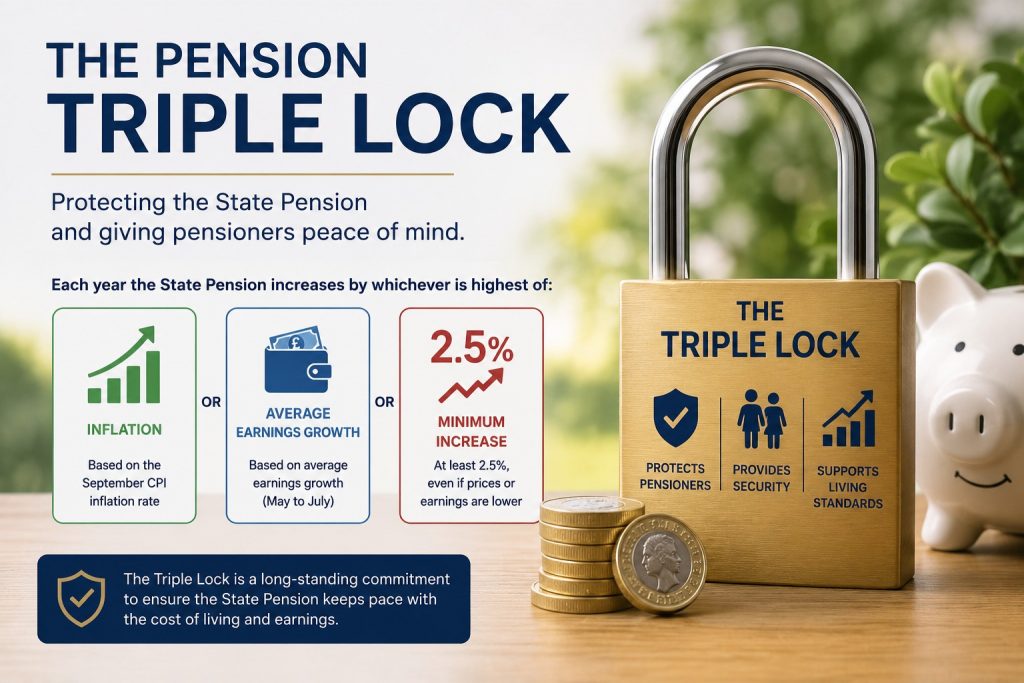
The Triple Lock guarantees that the State Pension increases each year by whichever is highest:
- Inflation
- Average earnings growth
- 2.5%
Although the Triple Lock provides valuable protection for pensioners, it also contributes significantly to increasing UK Welfare Spending.
3. Health and disability benefits
Another major driver is the growing number of people claiming health and disability-related benefits.
The number of individuals receiving Personal Independence Payment (PIP) and other health-related support has increased substantially in recent years. This reflects a combination of demographic changes, greater awareness of health conditions and changing patterns of long-term illness.
4. Inflation
Many welfare payments increase annually in line with inflation.
When inflation rises sharply, government expenditure also rises because benefit payments are uprated to help protect recipients’ purchasing power.
Does higher UK Welfare Spending affect me?
Although most people do not receive significant welfare benefits, UK Welfare Spending can still affect everyone.
Government spending must ultimately be financed through taxation or borrowing.
Future governments therefore face difficult choices, including:
- Increasing taxation.
- Changing pension allowances.
- Adjusting inheritance tax rules.
- Altering ISA or pension contribution limits.
- Reforming benefits and public spending.
- Increasing borrowing.
No one knows exactly what future Budgets will contain, but history clearly shows that tax legislation changes regularly.
This is one of the strongest reasons why financial planning should never rely on today’s rules remaining unchanged.
What can you control?
While we cannot control government policy or future UK Welfare Spending, we can control our own financial decisions.
Developing a comprehensive financial plan can help you remain resilient regardless of economic or political change.
Areas worth reviewing include:
Pension planning
Regular pension contributions remain one of the most tax-efficient ways of saving for retirement.
Reviewing your pension strategy annually helps ensure it continues to meet your long-term objectives.
Investment planning
A diversified investment portfolio can help your savings grow over the long term while managing risk appropriately.
Investment markets naturally experience periods of volatility, but long-term planning remains key.
Emergency savings
Having sufficient emergency savings can provide valuable peace of mind during periods of economic uncertainty.
Many advisers recommend maintaining several months’ essential expenditure in readily accessible cash.
Tax planning
Making full use of available ISA allowances, pension reliefs and other legitimate tax planning opportunities can improve long-term financial outcomes.
Tax legislation changes regularly, making periodic reviews increasingly important.
Estate planning
Inheritance Tax continues to affect many more families than in previous decades.
Reviewing wills, Lasting Powers of Attorney and estate planning arrangements helps ensure your wishes are carried out while potentially improving tax efficiency.
Why regular financial reviews matter
Financial planning should never be regarded as a one-off exercise.
Life changes.
Legislation changes.
Investment markets change.
Interest rates change.
Inflation changes.
And government policy, including UK Welfare Spending, changes over time.
Regular financial reviews allow your strategy to evolve alongside these changes and ensure your financial plan remains aligned with your goals and personal circumstances.
Looking beyond the headlines
News headlines often focus on political debate, but successful financial planning should always take a longer-term view.
Regardless of which political party forms the Government, the UK will continue to face challenges such as an ageing population, rising healthcare costs, inflation and changing tax legislation.
These factors will continue to influence UK Welfare Spending for many years.
Rather than worrying about matters outside your control, concentrate on building a financial plan that is flexible, tax-efficient and designed to adapt as circumstances change.
How PWS Financial Consulting can help
At PWS Financial Consulting, we understand that economic uncertainty can make important financial decisions feel overwhelming.
Whether you are planning for retirement, reviewing your pension, investing for the future or considering inheritance tax planning, we take the time to understand your personal objectives before recommending solutions tailored to your circumstances.
Our aim is simple: to provide clear, independent financial advice that gives you confidence, whatever the future may bring.
If you would like to review your pensions, investments, retirement plans or overall financial strategy, we would be delighted to help.
PWS Financial Consulting – Helping you plan with confidence for today, tomorrow and beyond.



Be the first to comment on "UK Welfare Spending Explained in 2026"